The Exercise for a Happy Death
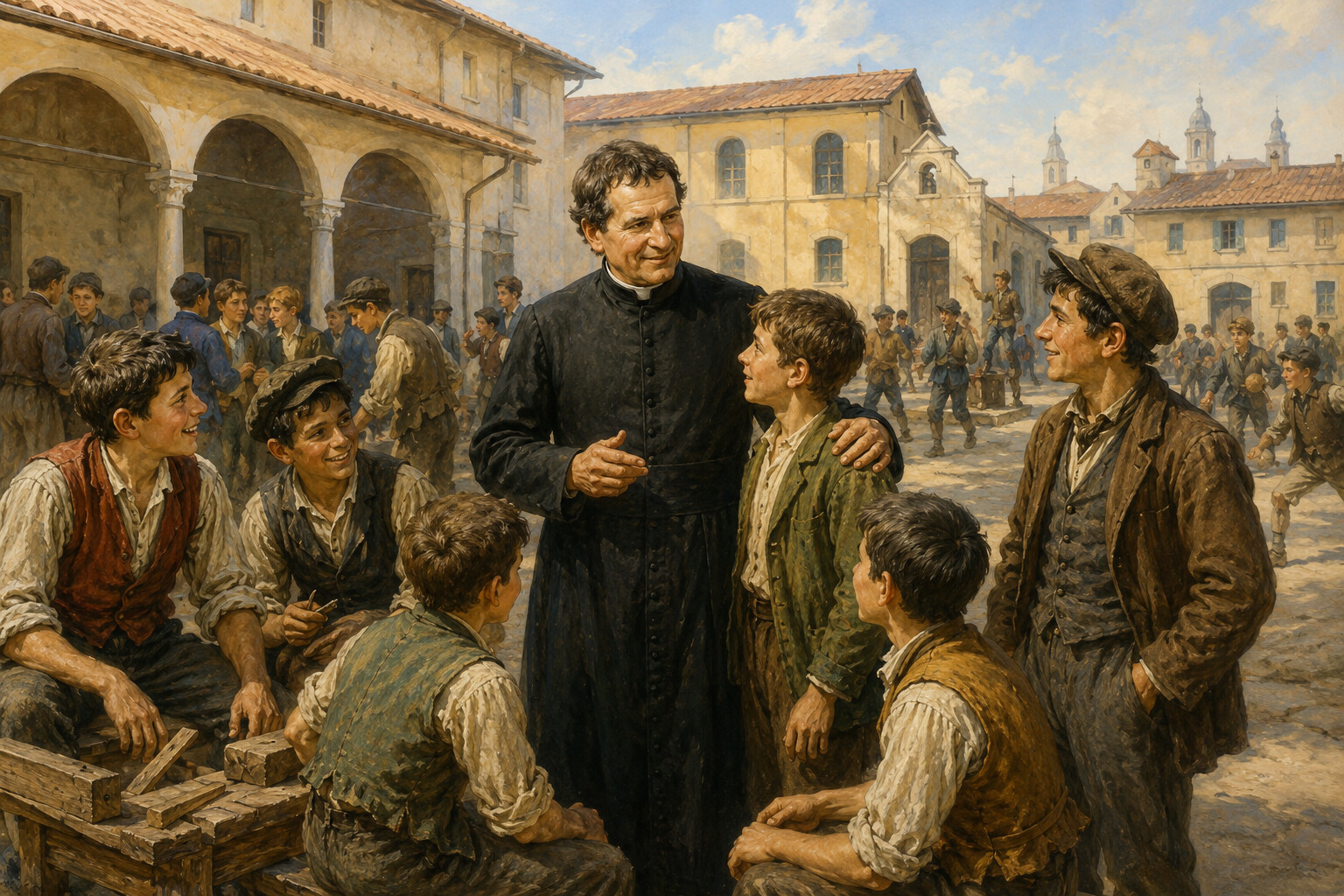 AI-generated historical illustration of Don Bosco among boys at Valdocco; not an authentic image of the historical scene.
At Don Bosco's Oratory in Valdocco, Turin, hundreds of boys filled their days with lessons, work, prayer and noisy games. But once each month, the normal rhythm paused for something with a name that can sound startling today: the Exercise for a Happy Death.
It was not a prediction that someone was about to die. It was a regular spiritual practice. Don Bosco asked the boys to imagine, for one day, that they were putting their lives in order for the last time.
On that day they went to Confession and received Holy Communion with particular care, as though these might be their final opportunity. The practice also included prayer and reflection on death. At the end, the boys prayed for whichever one among them would be the first to die.1
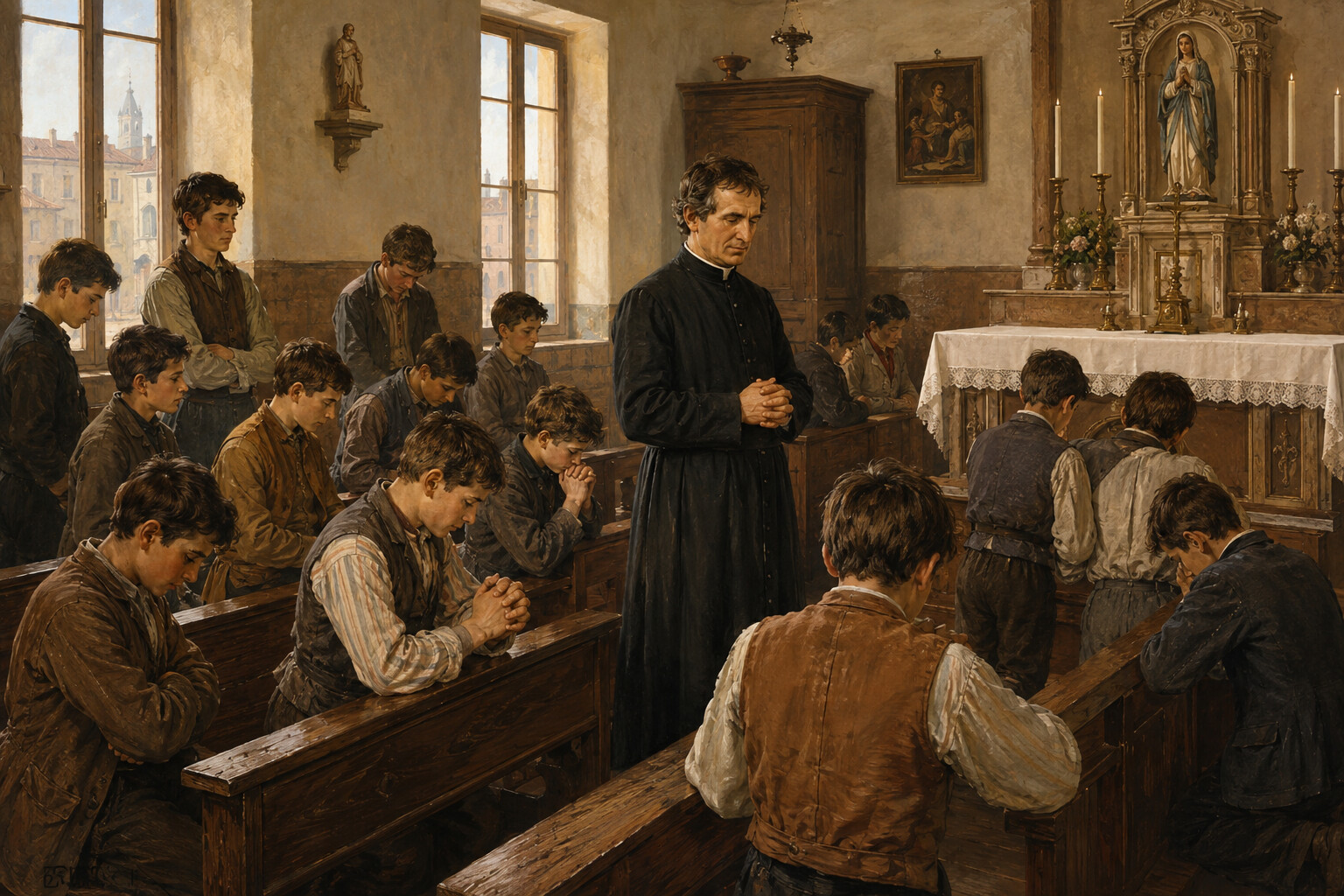 AI-generated historical illustration of the monthly Exercise for a Happy Death at Valdocco; not an authentic image of the event or chapel.
Then ordinary life resumed. The boys returned to classrooms, workshops, meals and games, and the same exercise came around again the following month.
One of the boys who took the exercise especially seriously was Dominic Savio. Don Bosco later wrote that Dominic made it each month with great earnestness. During the prayer for the first among them to die, Dominic sometimes said that the prayer should be for him.1
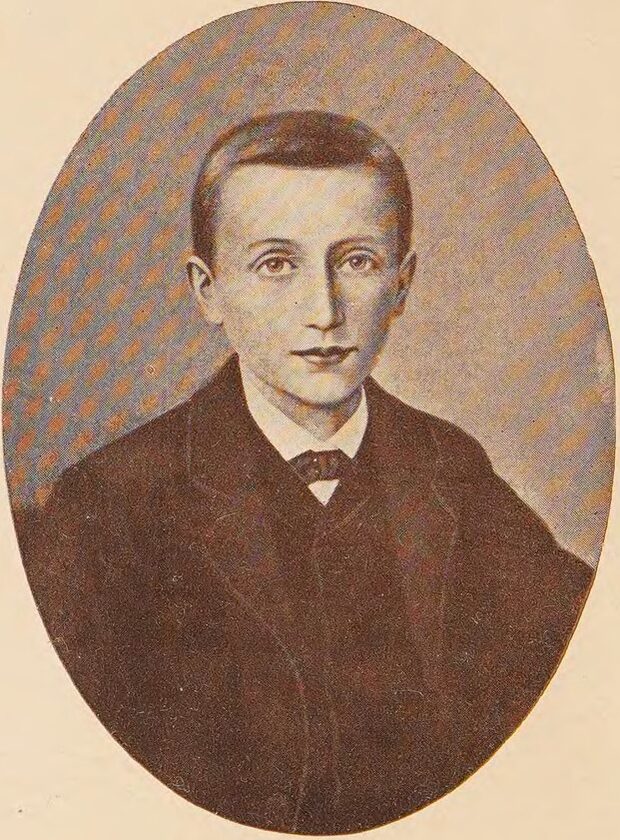 Dominic Savio, who took part in the monthly Exercise for a Happy Death at Valdocco. Public-domain historical devotional image.
By early 1857 Dominic's health had weakened. Doctors advised that he leave the Oratory and return to his family at Mondonio. On the morning he was to leave, he made the Exercise for a Happy Death with his companions. Don Bosco remembered him saying that he wanted to make it well because it might truly be his preparation for death. He then packed his trunk, went around saying goodbye to his friends, and left the Oratory.1
He died at home on 9 March 1857, aged fourteen. According to Don Bosco's account, in his final hours Dominic asked his father to take The Companion of Youth—Don Bosco's prayer book for young people—and read the prayers for a happy death. His father did so beside his bed.1
The monthly exercise did not disappear with the boys of Dominic's generation. Don Bosco later wrote instructions for the Salesians themselves. He asked them to make the exercise every month, setting aside ordinary work where possible. They were to approach Confession and Communion with special seriousness, review how they had lived during the previous month, notice what needed improvement and make resolutions for the month ahead.2
He carried the practice into the growing Salesian mission. In the keepsakes he gave the first Salesian missionaries leaving for South America in 1875, he told them not to neglect the monthly Exercise for a Happy Death.3
An Old Practice with a Modern Echo
The idea is not limited to nineteenth-century Catholic spirituality. Philosophically, it resembles the ancient memento mori tradition—remembering that life is finite so that it may be lived more deliberately. Spiritually, Don Bosco placed that remembrance within repentance, reconciliation and hope in eternal life. Modern psychology approaches mortality without requiring a religious interpretation, and its findings are more nuanced: reminders of death can sometimes produce anxiety or defensiveness, but reflective engagement with mortality can also redirect attention towards meaningful goals, close relationships and personal values.4 A non-randomised controlled study of university students taking a course on death and dying reported increases in death acceptance, intrinsic values, meaning in life and vitality compared with students in another course.5 Don Bosco's exercise was not a psychological treatment, but its central act—a deliberate pause to examine how one is living—still has a recognisable human purpose today.
The Resurrection Promise
For Christians, physical death is not the final end. Jesus declared, “I am the resurrection and the life” (John 11:25). Catholic teaching holds that at death the soul is separated from the body and goes to meet God, while the body awaits the resurrection, when body and soul will be reunited. The natural fear of dying may remain, but faith in Christ and the hope of eternal life can help believers face death with trust rather than despair.6
Sources
- St John Bosco, Life of Dominic Savio, Pupil at the Oratory of St Francis de Sales, Salesians of Don Bosco. Used for the monthly practice, Dominic's participation, his departure from Valdocco and his final hours. Don Bosco's account is a near-contemporary spiritual biography rather than a verbatim contemporaneous record of Dominic's words.
- St John Bosco, “To the Salesian Confreres”, Salesians of Don Bosco. Used for Don Bosco's instructions on the monthly exercise.
- St John Bosco, “St John Bosco's Keepsakes for the First Missionaries”, Salesians of Don Bosco. Used for his 1875 instruction to the first missionaries.
- Kenneth E. Vail III et al., “When Death is Good for Life: Considering the Positive Trajectories of Terror Management,” Personality and Social Psychology Review 16(4), 2012. Review of both adverse and potentially constructive responses to mortality awareness.
- Natasha Lekes et al., “A Death and Dying Class Benefits Life and Living: Evidence From a Nonrandomized Controlled Study,” Journal of Humanistic Psychology, 2022. Used only as a modern comparison; the study concerns university death education, not Don Bosco's religious exercise.
- Catechism of the Catholic Church, §§990, 997, Holy See. Used for Catholic teaching on the immortal soul, the separation of soul and body at death, and their reunion in the resurrection.
Images: The Valdocco courtyard and monthly exercise scenes are original AI-generated historical illustrations created for DataTorch and are not authentic images of the events or buildings. The Dominic Savio portrait is a public-domain devotional image from an old book scan, available through Wikimedia Commons.