The Boy Who Helped Begin Don Bosco's Oratory
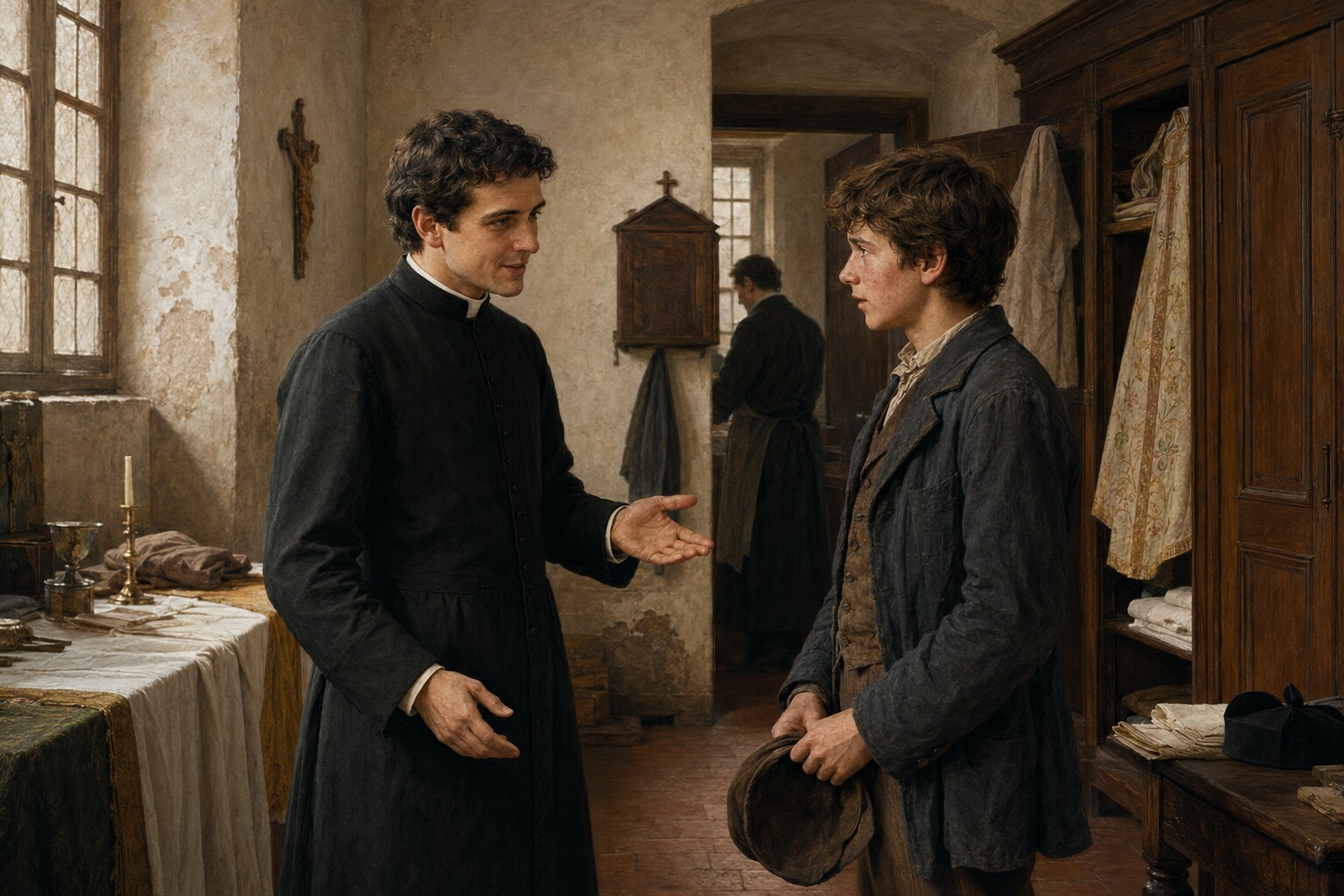 AI-generated historical illustration of the remembered meeting between Don Bosco and Bartolomeo Garelli.
The story of Bartolomeo Garelli and one welcoming encounter that grew into a mission for young people.
When John Bosco was about nine years old, he had a dream that remained with him for the rest of his life. He saw a crowd of boys fighting and using bad language. When he tried to stop them by force, a majestic figure told him that he would have to win them through gentleness and love, not blows. John did not understand the dream then. Years later, as a young priest in Turin, its meaning began to take shape among boys who were poor, alone or in danger.1
Turin was growing rapidly, drawing young workers from the surrounding countryside. Some arrived without their families, education or reliable protection. Don Bosco met them in streets, squares and prisons. He wanted to gather them, but as a newly ordained priest he had neither a building nor an organised work for them.
On 8 December 1841, Don Bosco was preparing to celebrate Mass in the Church of St Francis of Assisi. In a corner of the sacristy stood an unfamiliar boy. The sacristan asked him to serve at Mass, but the boy admitted that he did not know how.
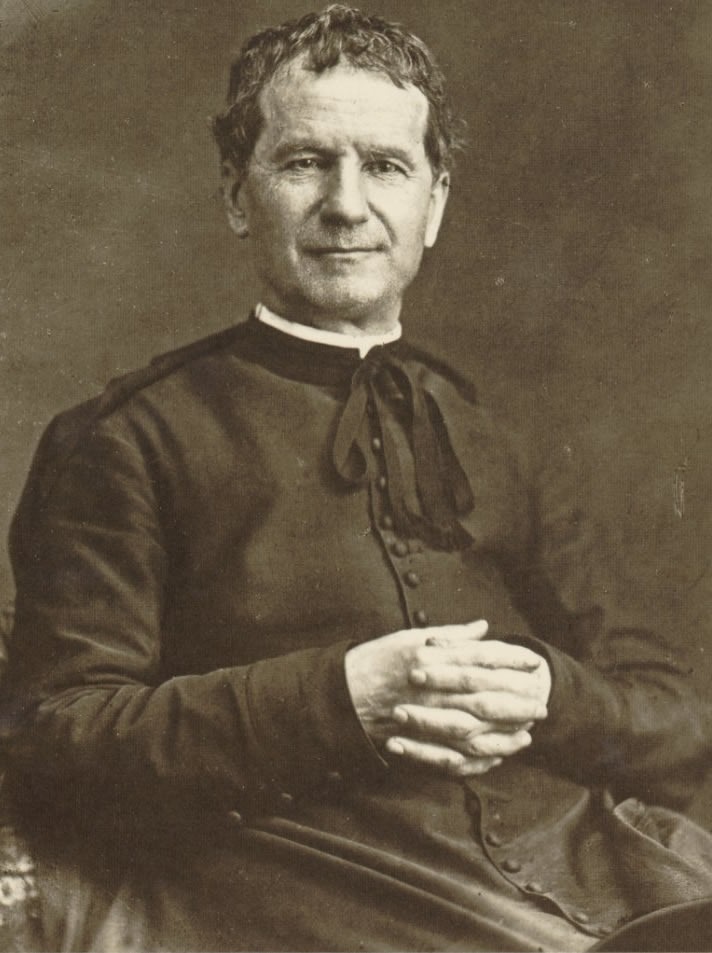 Don Bosco in Turin, 1880. The photograph was taken many years after his meeting with Bartolomeo Garelli.
Angered by his answer, the sacristan struck him with a feather duster and drove him away. Don Bosco immediately protested. He told the sacristan to bring the boy back, calling the stranger his friend.
The boy returned trembling and in tears. Don Bosco welcomed him calmly and invited him to remain for Mass. Afterwards, he took him into a side chapel and began to speak with him.1
His name was Bartolomeo Garelli. He was sixteen years old and came from Asti. Both his parents were dead. He could neither read nor write, had not made his First Communion and had gone to confession only when he was small. He was not attending catechism classes because the other pupils were younger and knew more than he did. He felt ashamed.1
Don Bosco asked whether he would come if he were taught alone. Bartolomeo agreed, but added one condition: he did not want to be beaten.
Don Bosco assured him that no one would hurt him. He said that Bartolomeo would be his friend and offered to begin the lesson at once. The young priest started with the simplest thing—the Sign of the Cross, which the boy did not yet know. He then gave him a short lesson about God. Don Bosco also prayed a Hail Mary with him, an act he would later remember as the humble beginning of his work.1, 2
Bartolomeo returned and brought some companions. Other boys soon joined them. Don Bosco continued meeting young workers and boys who needed special help, including some who had recently left prison. On Sundays and feast days, he taught them, prayed with them and gave them time to play. He also tried to help them find decent work and visited them during the week.1
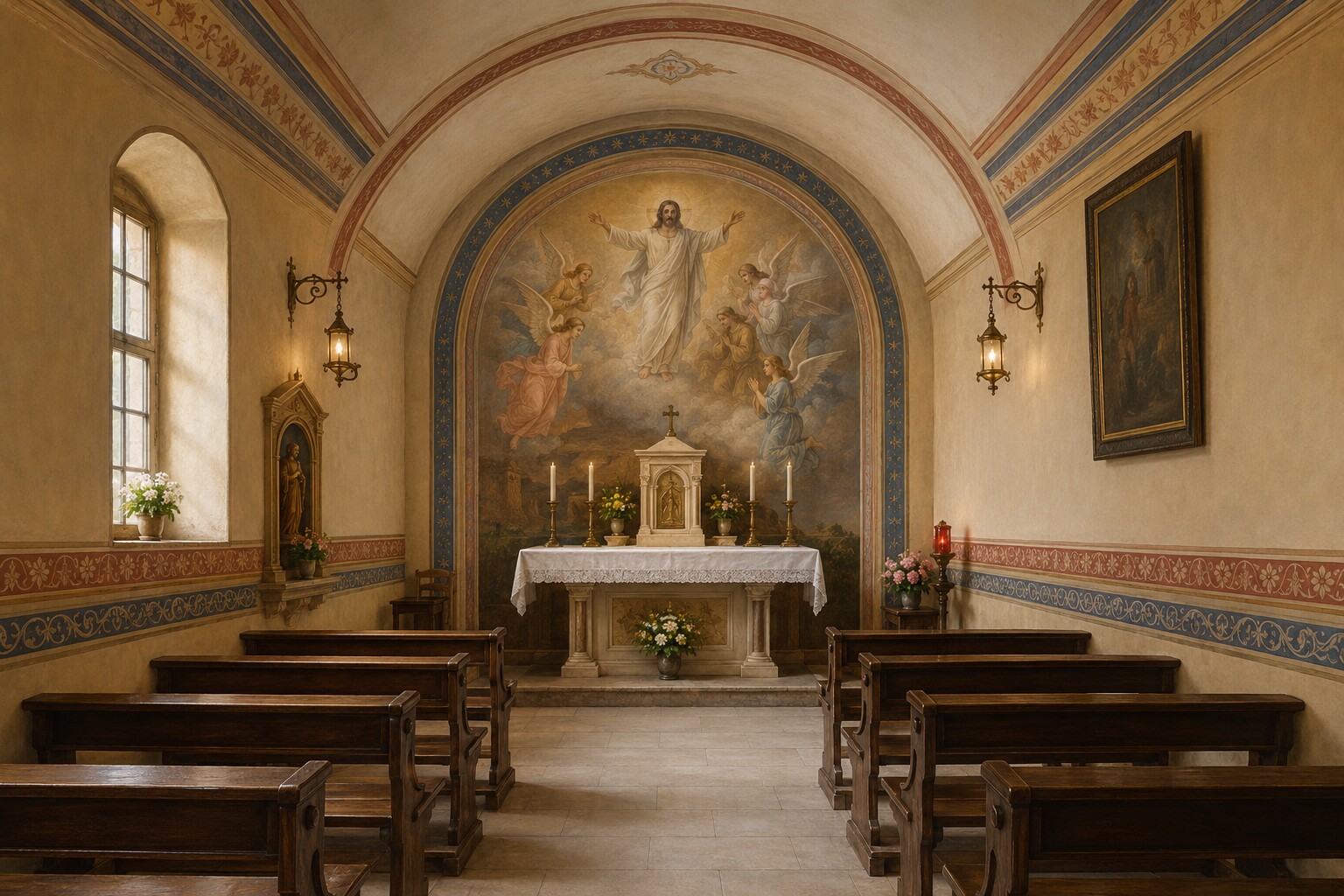 AI-generated architectural illustration inspired by the present Pinardi Chapel, which marks the site of the shed adapted for Don Bosco's Oratory in 1846.
As their numbers increased, finding a place for them became a constant struggle. The growing Oratory was moved from one temporary location to another. Residents complained about the noise; the boys' games wore away the grass in a rented field; officials feared that such large gatherings might cause disorder; and money and helpers were limited. In April 1846, with his health weakened and no place left for the boys, Don Bosco stood at the edge of their playing field and wept.1, 3
That same evening, a man approached him about a property owned by Francesco Pinardi in Valdocco. The available building was only a low, poor shed, but it could be converted into a chapel, and the surrounding ground gave the boys room to gather. On Easter Sunday, 12 April 1846, the Oratory entered the place that would become its permanent home.1, 4
From that modest beginning, Valdocco grew into a home, school, church and playground for young people. The work later spread far beyond Turin through the Salesian movement. Yet its remembered beginning remained a brief meeting in a sacristy: one excluded boy was called back, protected and welcomed as a friend.
DataTorch Closing Thought
A great work did not begin with a building, money or a crowd. It began when one person refused to let a frightened boy be driven away. Sometimes the first step towards changing many lives is simply to welcome the person standing before us.
Sources
- John Bosco, Memoirs of the Oratory of Saint Francis de Sales, especially the Dream at Nine, Bartolomeo Garelli and the Oratory's moves to Valdocco. Don Bosco wrote this memoir more than thirty years after the Garelli meeting, so the incident is presented as his remembered account.
- Biographical Memoirs of Saint John Bosco, Volume II, for the remembered Hail Mary and the early continuation of Garelli's story.
- Pietro Braido, Prevention, Not Repression: Don Bosco's Educational System, for the chronology of the wandering Oratory and its settlement at Pinardi.
- Aldo Giraudo and Giuseppe Biancardi, Don Bosco Lived Here, for the documented 1845–1846 chronology and the Pinardi site.
Images: The sacristy scene and Pinardi Chapel interior are AI-generated illustrations and are not authentic images of the historical events or buildings. The Don Bosco photograph is a public-domain 1880 image available through Wikimedia Commons.
Last fact-checked: 2 August 2026.