St. Ignatius of Loyola's 14 Rules for the Discernment of Spirits
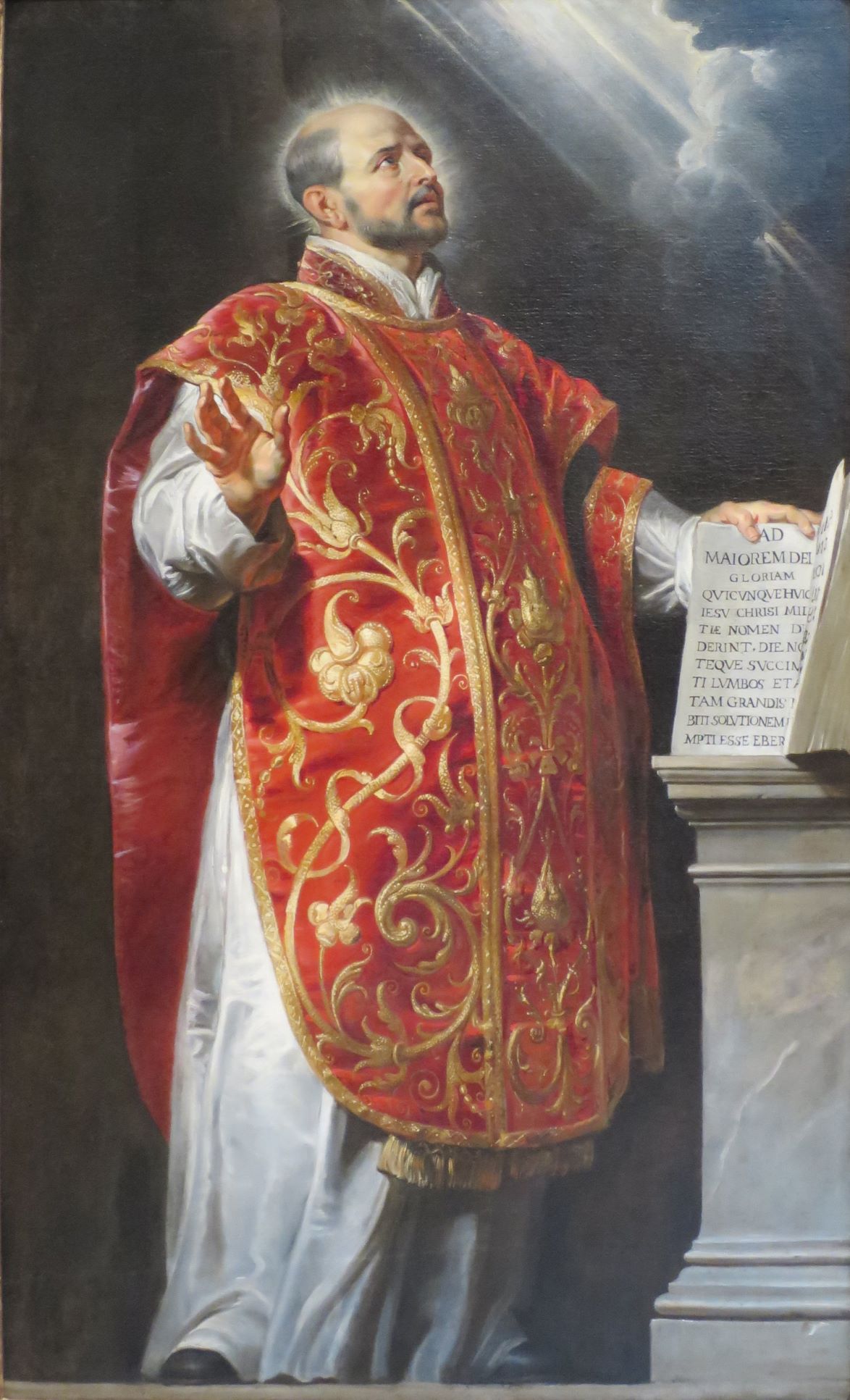 St. Ignatius of Loyola
St. Ignatius of Loyola (1491–1556) developed his rules for the Discernment of Spirits after a cannonball shattered his leg in battle. During his long recovery, he realized that different thoughts left him with distinct lingering emotions—some brought lasting peace and joy, while others left him feeling dry, agitated, and restless.
He codified these observations in his Spiritual Exercises, outlining 14 Rules for the first week of his retreat. Rather than being rigid laws, they form a psychological and spiritual framework to help individuals become aware of, understand, and ultimately accept or reject their internal movements.
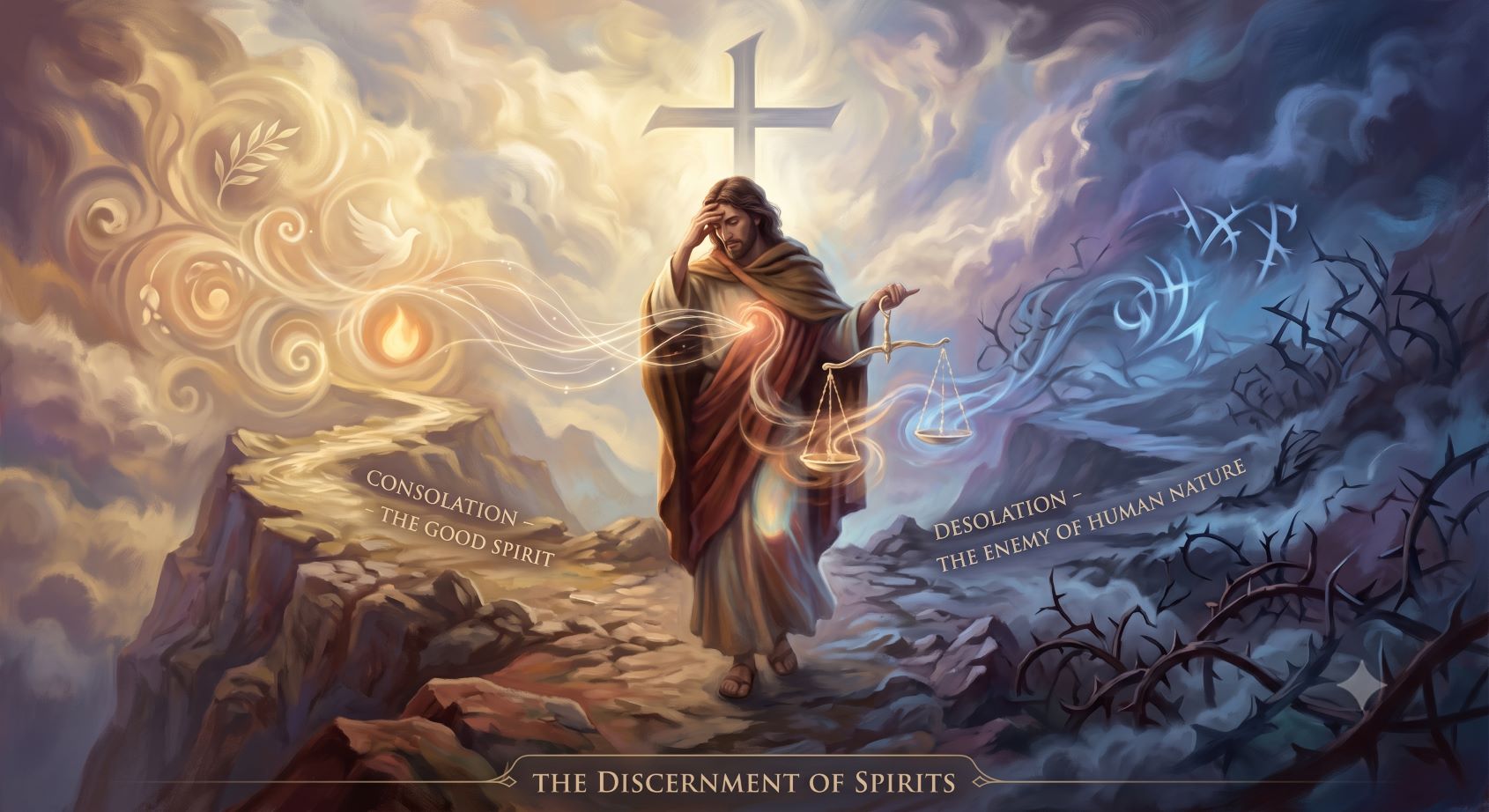 Discernment of Spirits
1. The Direction of the Soul (Rules 1 & 2)
Ignatius noted that the "good spirit" (God/grace) and the "evil spirit" (the enemy of human nature/ego/temptation) operate in completely opposite ways depending on the trajectory of a person's life:
- When moving away from God (from sin to sin): The evil spirit makes things feel smooth and easy, proposing apparent pleasures to keep the person comfortable in their vices. The good spirit acts as a disruptor—stinging the conscience and causing healthy remorse to wake the person up.
- When moving toward God (from good to better): The roles reverse. The good spirit brings peace, removes obstacles, and gives quiet courage. The evil spirit becomes the disruptor—bringing anxiety, false sadness, and throwing up mental roadblocks ("You aren't good enough," "This is too hard") to derail their progress.
2. Consolation and Desolation (Rules 3 & 4)
The entire framework hinges on recognizing two opposing inner states:
- Spiritual Consolation: An experience of being "on fire" with love for God and others. It brings deep peace, an increase in faith, hope, and charity, and makes heavy burdens feel light. Crucially, it is not always a "happy" emotion; a person can feel deep sorrow for their mistakes but still be in a state of spiritual consolation if it leads them toward growth and truth.
- Spiritual Desolation: An experience of darkness, turmoil, and restlessness. A person feels lazy, cut off from others, drawn toward earthly anxieties, and devoid of hope and love.
3. How to Act in Desolation (Rules 5–9)
Ignatius considered desolation the most dangerous time for a person’s spiritual journey. He provided strict operational rules for navigating it:
- Never change a decision in desolation (Rule 5): This is his most famous rule. Because the evil spirit guides desolation, any choice made in this state will be flawed. You must stick firmly to the decisions and resolutions you made when you were last in a state of consolation.
- Actively fight back (Rule 6): Do not just wait desolation out. Ignatius advises taking the offensive by insisting more intensely on prayer, meditation, and examining where the desolation came from.
- Cultivate patience (Rule 8): Remind yourself that God's grace is still present, even if you cannot feel it, and that consolation will eventually return.
- Understand why it happens (Rule 9): Ignatius outlined three reasons God permits desolation: 1) We have become lazy in our spiritual practices; 2) It is a trial to test our commitment without the "pay" of good feelings; 3) To remind us that true spiritual joy is a gift from God, not something we can manufacture on our own.
4. The Enemy's Tactics (Rules 12–14)
To help believers recognize the "evil spirit," Ignatius compared its tactics to three human behaviors:
- The Bully (Rule 12): The enemy acts like a bully—aggressive if you show fear, but cowardly if you stand your ground. If a person faces a temptation firmly and immediately, it loses its power. If they hesitate, the temptation becomes fiercely overwhelming.
- The False Friend (Rule 13): The enemy wants its deceptions to remain secret. Just as a seducer wants to keep an illicit affair hidden, the evil spirit thrives on secrecy. Ignatius insists that bringing dark thoughts, temptations, or anxieties out into the open—by sharing them with a trusted spiritual director, therapist, or friend—immediately breaks their power.
- The Military Commander (Rule 14): A commander besieging a castle will walk the perimeter, find the weakest point in the wall, and attack there. Similarly, the enemy studies a person's moral and psychological defenses, finding their specific vulnerability (such as pride, loneliness, greed, or fatigue), and attacks exactly at that weak point.
|