Harriet Tubman: Guided by Faith on the Road to Freedom
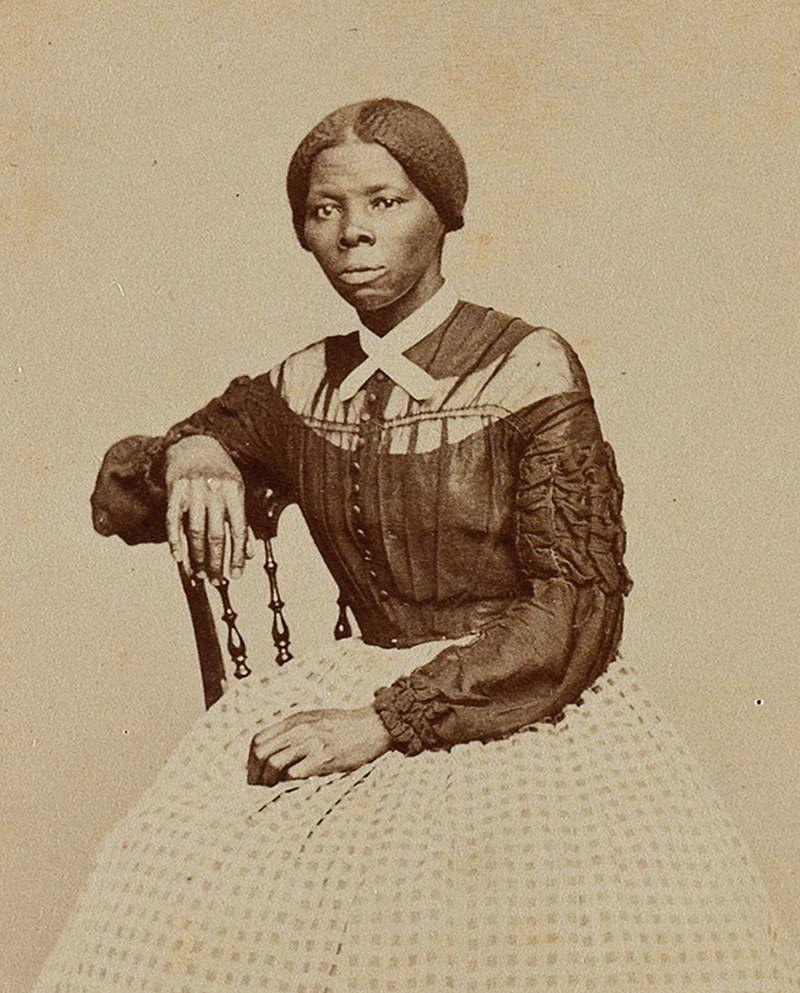 Harriet Tubman, photographed by Benjamin F. Powelson in Auburn, New York, about 1868–1869. Public domain.
Four men were following Harriet Tubman through the darkness as she guided them through the Underground Railroad (a secret network of people, routes and safe places that helped enslaved people escape to freedom) when she suddenly stopped.
The road ahead appeared to be the natural route. But Harriet believed that God was warning her not to continue. She told the men that they must leave the road, turn left and cross a stream.
The men hesitated. It was cold, the water was deep, and they could see no reason for going that way. Harriet stepped into the stream herself. The water rose until it reached her shoulders. Seeing her determination, the men followed.
After crossing that stream, they came to another. Still trusting the direction she believed she had received, Harriet continued. Beyond the second stream, they found a Black family who concealed them and helped them proceed towards freedom.3
Harriet knew the forests, marshes, waterways and stars. She planned carefully and depended upon trusted people along the route. But she also believed that God spoke to her soul. When human knowledge could take her no further, she prayed, listened and acted.
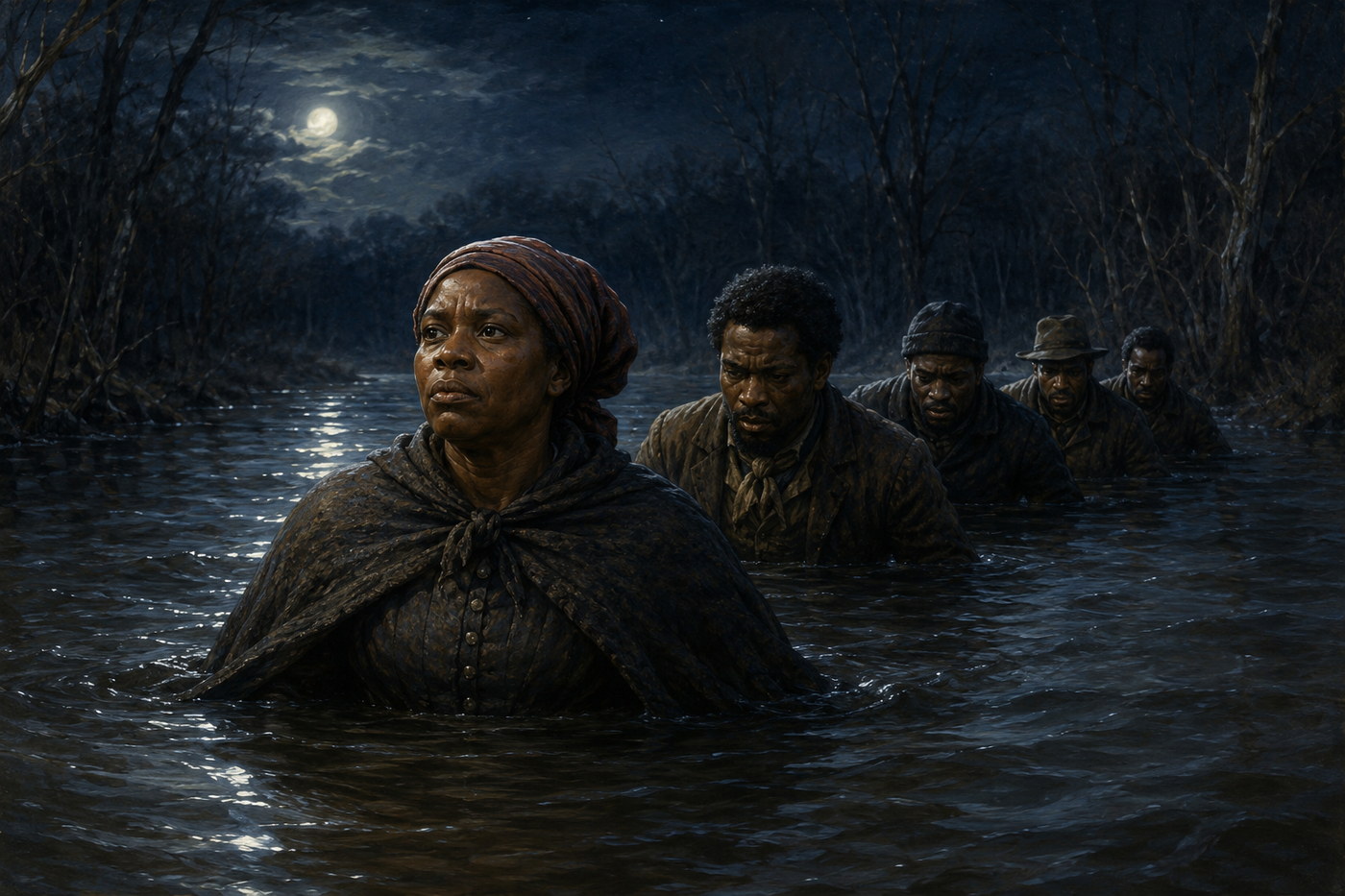 AI-generated historical reconstruction of Harriet Tubman leading four men through a stream after she believed God had warned her to change direction. It is an illustration, not an authentic image of the event.
The Blow That Could Have Ended Her Life
Harriet was born Araminta Ross around 1822 on the Eastern Shore of Maryland. Her parents, Ben Ross and Harriet “Rit” Green, were enslaved, and their children could be hired out or sold.
As a small girl, Araminta was separated from her family and sent to work in other households. She was beaten, deprived of food and made to labour beyond her strength.
When she was about thirteen, she was sent to a local store. An enslaved man attempted to escape, and an overseer ordered Araminta to help restrain him. She refused.
The overseer threw a heavy metal weight at the escaping man. It missed him and struck Araminta on the head.
She was carried back unconscious and left without proper medical treatment. Her mother nursed her through a long recovery, but the effects remained throughout her life. She experienced severe headaches, sudden periods of sleep or unconsciousness, vivid dreams and visions.15
Harriet did not regard these experiences merely as a weakness. She believed that some of them carried guidance from God. Prayer became a constant conversation in which she sought direction, courage and protection.
The injury had wounded her body, but it had not taken away her will. The girl who refused to help capture another enslaved person would eventually risk her own life to lead many people away from slavery.
“Liberty or Death”
Around 1844, Araminta married John Tubman, a free Black man, and began using the name Harriet, probably in honour of her mother.
Marriage did not make Harriet free. Under the law, she remained the property of the family that enslaved her. Any children born to her could also have been enslaved and sold.
In 1849, Harriet learned that she and members of her family might be sold. She decided to escape with her brothers Ben and Henry.
They left on 17 September 1849. But after beginning the journey, her brothers became frightened. One of them had recently become a father, and both feared the punishment they would receive if they were captured. They decided to return and compelled Harriet to return with them.
She had seen the road towards freedom and then been taken back into slavery. But the failure did not end her decision.
A short time later, Harriet left again—alone.
Before departing, she sang words that carried a hidden farewell:
“I’ll meet you in the morning.
I’m bound for the Promised Land.”
She travelled secretly through Maryland and Delaware, hiding during the day and moving when it was safer. She used her knowledge of the woods, the waterways and the North Star. Free Black families, Quakers and other opponents of slavery helped her along the route.
Harriet could not know which stranger might shelter her and which one might betray her. Capture could bring beating, imprisonment, sale to the Deep South or death. Yet she continued towards Pennsylvania.
When she finally crossed into a free state, she later remembered looking at her hands to see whether she was still the same person. Everything around her appeared transformed. The sunlight seemed like gold, and she felt as though she had entered heaven.2
But the happiness was soon mixed with loneliness.
Her parents, brothers, sisters, husband and friends were still in Maryland. She was free, but she was separated from nearly everyone she loved.
Harriet reached a decision that shaped the next ten years of her life: she would make a home in the North, and with God’s help, she would bring others there.
The Rescue at the Auction
In December 1850, Harriet learned that her niece Kessiah and Kessiah’s two children were to be sold at an auction outside the courthouse in Cambridge, Maryland.
Once sold, the mother and children might be separated permanently.
Harriet helped organise their escape with Kessiah’s husband, John Bowley, a free Black man. After the auction, Kessiah and the children were taken away before they could be delivered into slavery. Bowley transported his family by boat towards Baltimore, where Harriet met them.
Harriet then guided the family north.6
This was one of her earliest rescue missions. She was no longer escaping only for herself. She had begun returning to the land from which people were desperately trying to flee.
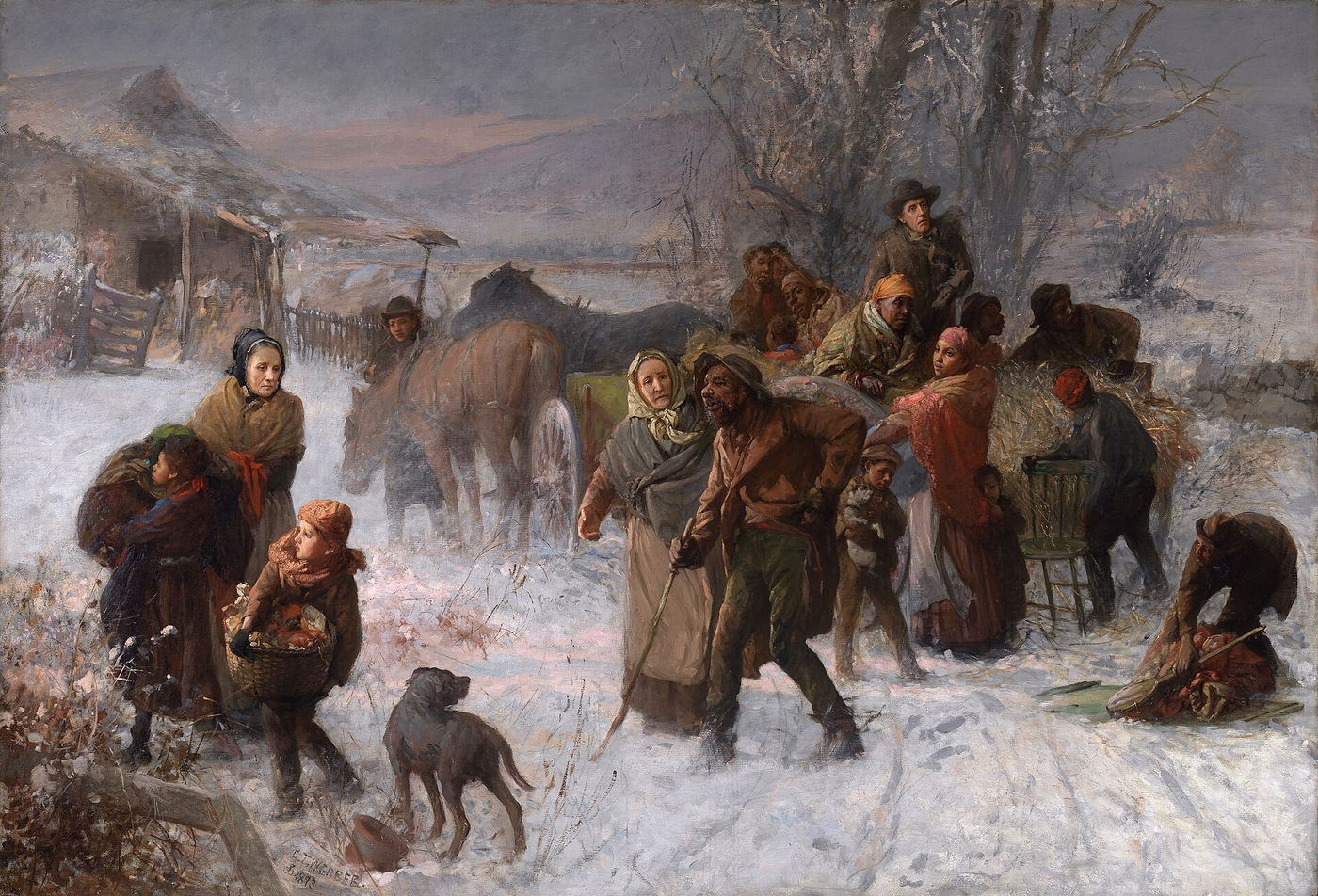 The Underground Railroad by Charles T. Webber, 1893. The painting depicts freedom seekers receiving assistance from abolitionists. Public domain.
The Husband Who Would Not Come
Harriet also returned hoping to bring her husband, John Tubman, north with her.
When she reached Maryland, she discovered that John had married another woman. He refused to leave.
The news caused Harriet deep pain, but she did not allow it to end her mission. Other enslaved people were ready to escape. She gathered them and led them north instead.
Her personal disappointment became another journey to freedom for people who might otherwise have remained enslaved.2
By this time, the Fugitive Slave Act of 1850 had made the northern states increasingly dangerous. People who had escaped could be captured and returned to slavery, while anyone assisting them could face severe punishment. Harriet therefore extended some of her journeys into Canada, where American slave laws had no authority.
When Harriet Heard a Warning
Harriet’s faith was not separate from her work. It influenced how she made decisions in moments of danger.
Before every rescue, she gathered information, planned routes and contacted people she trusted. During the journey, however, circumstances could change without warning. Roads could be watched. Bridges could be guarded. Informers and slave catchers could be waiting ahead.
At such moments, Harriet prayed.
The journey in which she led four men away from the road and through the two streams became one example of this trust. The men could not initially understand her decision. Harriet herself could not see what lay beyond the water. She acted because she believed that God had told her to stop and turn aside.
The unexpected route led them to shelter.
Thomas Garrett, a Quaker abolitionist who assisted Harriet and many other freedom seekers, later said:
“I never met with any person of any color who had more confidence in the voice of God, as spoken direct to her soul.”
Harriet did not believe that faith meant remaining passive and waiting for God to do everything. She walked long distances, endured freezing weather, found food and shelter, studied the landscape, protected frightened people and made difficult decisions.
Her faith gave unity to all these human abilities. Her mind remained alert, her body continued despite exhaustion, and her spirit held firmly to the purpose of freedom.
Christmas Eve in the Fodder House
By December 1854, Harriet had learned that three of her brothers—Henry, Robert and Ben—were in danger of being sold.
She secretly returned to Maryland and sent a message through Jacob Jackson, a trusted free Black farmer. Her brothers were told to be watchful and ready.
Harriet reached the Eastern Shore on Christmas Eve.
After darkness fell, the brothers gathered in a fodder house near their parents’ cabin. Ben’s fiancée, Jane, joined them, together with two other enslaved men.
Their parents were nearby, but a long farewell could place everyone in danger. The group had to leave immediately.
Harriet led them for more than one hundred miles through the winter landscape towards Philadelphia. They travelled beyond the reach of the people who claimed ownership over them and began new lives in freedom.4
Years earlier, two frightened brothers had made Harriet abandon her first escape. Now she had returned and led three of her brothers out with her.
Bringing Her Parents Home
Harriet’s father, Ben Ross, had received his freedom in 1840. He later purchased the freedom of Harriet’s mother, Rit. But legal freedom did not guarantee their safety.
Ben helped people escaping from slavery. In 1857, authorities suspected him of sheltering a group known as the Dover Eight, and he was in danger of arrest.
Harriet returned once again.
Her parents were elderly and could not make the entire journey on foot. Harriet obtained a horse and assembled a simple wagon from whatever materials she could find. She placed her parents and the possessions they could carry inside it and drove them towards Delaware.
With assistance from Underground Railroad supporters, she brought them through the northern states and eventually to St Catharines in Canada.2
Harriet had once crossed into freedom alone, leaving her parents behind. Eight years later, she carried them away from danger and reunited them with members of their family.
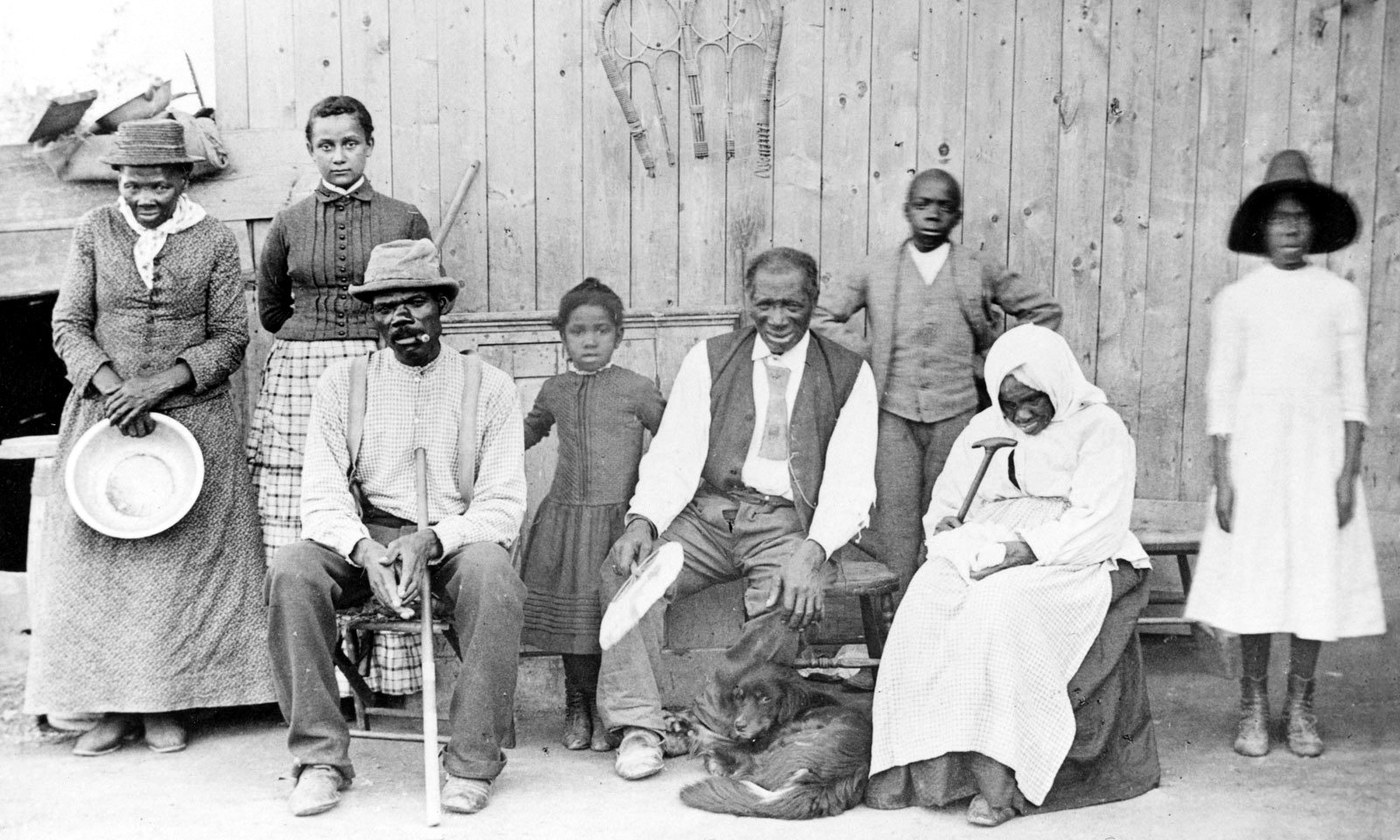 Harriet Tubman, at far left, with family members, friends and neighbours at her home in Auburn, New York, about 1887. Photograph attributed to William H. Cheney. Public domain.
“I Never Lost a Passenger”
Between approximately 1850 and 1860, Harriet Tubman made about thirteen journeys into Maryland and personally guided around seventy people to freedom. She also gave directions and assistance that enabled many others to escape independently.
The exact routes were deliberately concealed, and many details were never recorded. Secrecy protected both the travellers and the people who sheltered them.
Harriet later described her achievement using the language of the Underground Railroad:
“I never ran my train off the track, and I never lost a passenger.”
She did not claim that the journeys were easy or that she never felt fear. She believed that she had been given a mission, and that belief became stronger than fear.2
DataTorch Closing Thought
Harriet Tubman’s extraordinary work grew from the union of faith and action. She prayed for guidance, trained her mind to recognise danger, used every physical strength she possessed and continued when the road seemed impossible.
She could not see the whole journey before taking the first step. But she believed that freedom was God’s will, listened for His direction and walked forward. Because she did, many others walked into freedom with her.