Hezekiah: The King Who Leaned on Heaven
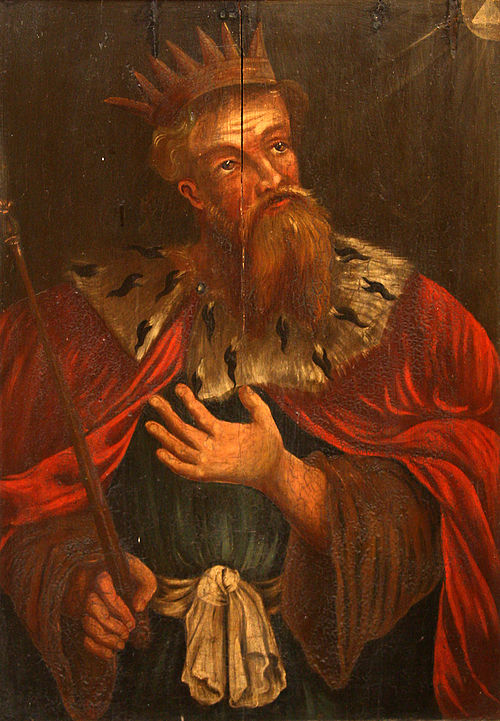 King Hezekiah on a painting by unknown artist
In the long line of Davidic kings, few stand as tall as Hezekiah. Ruling the Southern Kingdom of Judah during the late 8th century BC, he inherited a nation on the brink of spiritual and political collapse. While many kings wavered between Yahweh and pagan idols, Hezekiah is remembered for a singular, unwavering focus: a bone-deep belief that God was bigger than any empire.
A Foundation of Faith: The Great Reform
Hezekiah didn’t wait for a crisis to find his faith; he built his life on it from day one. Upon taking the throne, he immediately reopened the doors of the Temple in Jerusalem, which his father Ahaz had nailed shut.
- Purifying the Land: He smashed the "high places" (pagan altars) and even destroyed the bronze serpent Moses had made, because the people had begun to worship it as an idol.
- Restoring the Passover: He invited all of Israel and Judah to return to the Lord, sparking a national spiritual awakening.
This internal strengthening was crucial. Hezekiah knew that before he could face an external enemy, his nation had to be right with God.
The Assyrian Storm
The ultimate test of Hezekiah’s faith came in the form of Sennacherib, the ruthless King of Assyria. The Assyrians were the "superpower" of the day, known for their terrifying military tactics and a trail of conquered nations.
After swallowing up the Northern Kingdom of Israel, the Assyrian war machine turned its sights on Jerusalem. Sennacherib didn't just bring swords; he brought psychological warfare. His field commander, the Rabshakeh, stood outside the city walls and mocked the Judeans in their own language:
"On whom are you depending, that you rebel against me? ... Do not let Hezekiah deceive you. No god of any nation has ever delivered his land from the hand of the king of Assyria!" (2 Kings 18:20, 33)
The Prayer That Changed History
Facing certain annihilation, Hezekiah did something radical. He didn’t surrender, and he didn't rely solely on his military defenses—though he had prepared the city by building the famous Hezekiah’s Tunnel to secure the water supply.
Instead, Hezekiah took the threatening letter from the Assyrians, went into the Temple, and spread it out before the Lord. His prayer was not for personal glory, but for God’s reputation:
"Now, Lord our God, deliver us from his hand, so that all the kingdoms of the earth may know that you alone, Lord, are God." (2 Kings 19:19)
The Divine Response
Through the prophet Isaiah, God sent a message of reassurance. He promised that Sennacherib would not "shoot an arrow" into the city nor build a siege ramp against it.
That very night, the Bible records that the Angel of the Lord went out and struck down 185,000 men in the Assyrian camp. Sennacherib woke up to a decimated army and retreated in shame to Nineveh, where he was eventually assassinated by his own sons.
The Legacy of Hezekiah
Hezekiah’s story is a masterclass in resilience through reliance. He reminds us that:
- Preparation matters: He dug tunnels and fortified walls.
- Prayer is the final word: He knew that human effort has a ceiling, but God’s power is limitless.
Hezekiah wasn't a perfect man—he later struggled with pride regarding his wealth—but in the moment of Judah's greatest peril, his "clinging to the Lord" saved a nation from extinction.
Traditional Prayer in Time of Danger
"O God, who know us to be set in the midst of so great dangers, that, by reason of the frailty of our nature, we cannot stand upright, grant us such health of mind and body, that those evils which we suffer for our sins we may overcome through Your assistance. Through Christ our Lord. Amen".